Yes, but the benefits of creatine should not be underestimated.
Last updated on December 19, 2025

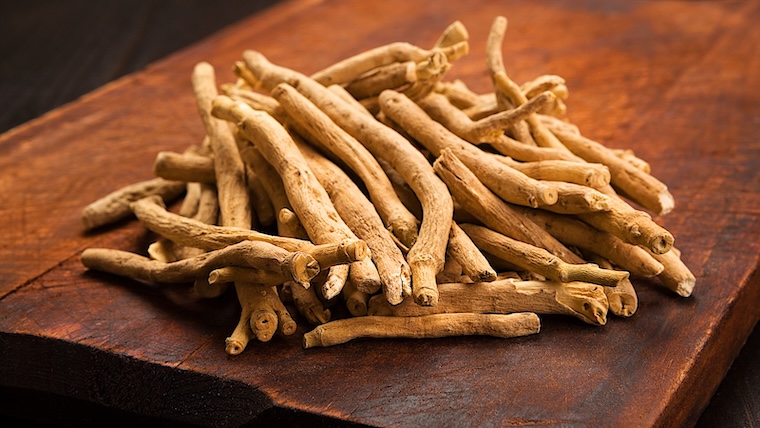
A comprehensive 2025 review of the herbal supplement ashwagandha, known for its anti-stress properties, may increase muscle gain in ways beyond promoting relaxation. Although not the first evidence of ashwagandha’s benefits, this new review included studies examining its mechanisms and effects across multiple domains. (1)
Literature Takeaways
New data show the most benefits between 300 and 900 milligrams daily, usually taken for 8-12 weeks, 600 milligrams is the most effective dose.
Editor’s note: The content on BarBend is intended to be educational in nature, but should not be construed as medical advice. The opinions and articles on this site are not intended to be used as a diagnosis, prevention, and/or treatment of health problems. Talking to your doctor before starting a new exercise, nutrition, and/or supplement program is always a good idea.
The review was case-based rather than programmatic, so no formal risk scores were used. Eighty percent of the research was done in men, and the first female randomized controlled trial only appeared in 2025, limiting the data to women.
Sample sizes were typically less than 60 participants, and most studies lasted only 8-12 weeks, leaving long-term outcomes unclear.
Lean Muscle & Strength Gains
The muscle building effects of ashwagandha are evident. Dr. Israetel explained: “There is a significant increase in lean body mass that is measured and verified,” explained Dr. About 25-40% of the muscle building capacity of creatine; polite but sensible.
The strength results were slightly better: results of “40 to 60% of the effect of creatine” in the maximum improvement of one rep, usually showing an increase of 5-8% during programs of 8-12 weeks.
Can Ashwagandha Improve Hormones?
Ashwagandha appears to work by altering hormones. “Testosterone makes you broke, cortisol makes you lose jack,” says Dr. Israel. “Testosterone makes you leaner, cortisol makes you leaner.” (2) (3)
“If you significantly lower cortisol with [ashwagandha] and increasing testosterone, is where many of these other benefits really come from,” explains Dr. Israetel.
Aerobic strength and recovery
Ashwagandha appears to increase VO₂ max significantly, with studies showing around 4ml/kg/min improvement over 8-12 weeks. (4) This improvement in aerobic capacity can improve recovery between sets and training sessions.
Recovery markers showed improvement, showing 10-20% better recovery rate scores and reduced perception of pain.
Effects on Depression and Anxiety
Ashwagandha has strong effects on stress management, with many studies showing a reduction in anxiety. (5)(6)(7)(8) This has psychological and physiological benefits, such as improved training effects with better sleep quality and chronic cortisol exposure. (9)
Side Effects and Safety
Although generally safe for most healthy adults, ashwagandha is not always completely free of side effects, with many reports of adverse psychological and physical reactions. Reducing stress and anxiety, although good, can disrupt natural emotions if excessive.
The verdict of Ashwagandha
The review ranks ashwagandha as a “multi-process supplement in the middle” rather than a single-phase supplement like creatine. Ashwagandha provides almost half of the effects of creatine for the body and additional benefits.
Stressful times such as the final stages of fat loss, when cortisol levels are elevated, can be ideal for ashwagandha dosing. Taking 300-600mg daily of a high-quality extract in the morning may provide a low-risk option for limited but noticeable improvement. Always talk to your doctor before taking new supplements.
More Nutrient Content
References
- Sprengel M, Laskowski R, Jost Z. Withania somnifera (Ashwagandha) supplementation: a review of its mechanisms, health benefits, and role in sports performance. Nutr Metab (Lond). 2025 Feb 5;22(1):9. doi: 10.1186/s12986-025-00902-7. PMID: 39910586; PMCID: PMC11800443.
- Katsuhara S, Yokomoto-Umakoshi M, Umakoshi H, Matsuda Y, Iwahashi N, Kaneko H, Ogata M, Fukumoto T, Terada E, Sakamoto R, Ogawa Y. Effect of Cortisol on Decreased Muscle Strength and Mass: A Mendelian Randomization Study. J Clin Endocrinol Metab. 2022 Mar 24;107(4):e1477-e1487. doi: 10.1210/clinem/dgab862. PMID: 34850018.
- Braun TP, Marks DL. Control of muscle mass by chronic glucocorticoids. Front Physiol. 2015 Feb 3;6:12. doi: 10.3389/fphys.2015.00012. PMID: 25691871; PMCID: PMC4315033.
- Choudhary B, Shetty A, Langade DG. The effectiveness of Ashwagandha (Withania somnifera [L.] Dunal) in improving cardiorespiratory endurance in healthy adults. Come on. 2015 Jan-Mar;36(1):63-8. doi: 10.4103/0974-8520.169002. PMID: 26730141; PMCID: PMC4687242.
- Bachour G, Samir A, Haddad S, Houssaini MA, El Radad M. Effects of Ashwagandha Supplements on Cortisol, Depression, and Anxiety Levels in Adults: A Systematic Review and Meta-Analysis. BJPsych Open. 2025 Jun 20;11(Suppl 1):S39. doi: 10.1192/bjo.2025.10136. PMCID: PMC12242034.
- Akhgarjand C, Asoudeh F, Bagheri A, Kalantar Z, Vahabi Z, Shab-Bidar S, Rezvani H, Djafarian K. Does Ashwagandha supplementation have a beneficial effect in managing anxiety and depression? A systematic review and meta-analysis of randomized controlled trials. Phytother Res. 2022 Nov;36(11):4115-4124. doi: 10.1002/ptr.7598. Epub 2022 Aug 25. PMID: 36017529.
- Pandit S, Srivastav AK, Sur TK, Chaudhuri S, Wang Y, Biswas TK. Results of Withania somnifera Release in Chronically Depressed Adults: A Randomized Controlled Trial. Nutrients. 2024 Apr 26;16(9):1293. doi: 10.3390/nu16091293. PMID: 38732539; PMCID: PMC11085552.
- Albalawi AA. Dual effect of Ashwagandha: Significant reduction of cortisol but no effects on perceived stress – A systematic review and meta-analysis. Health Nutr. 2025 Aug 1:2601060251363647. doi: 10.1177/02601060251363647. Epub ahead of print. Policy number: 40746175.
- Salve J, Pate S, Debnath K, Langade D. Adaptogenic and Anxiolytic Effects of Ashwagandha Root Extract in Healthy Adults: A Double-Blind, Randomized, Placebo-Controlled Clinical Study. Cureus. 2019 Dec 25;11(12):e6466. doi: 10.7759/cureus.6466. PMID: 32021735; PMCID: PMC6979308.
Featured image via Shutterstock/Eskymaks


