A strength coach reveals a plank grip time that proves maximum strength in the 50s.
The product recommendations in this post are recommendations of the author and/or the expert consulted and do not contain affiliate links. Explanation: If you use these links to make a purchase, we will not earn a commission.
Vital energy is often seen during things that people don’t think twice about. Carrying groceries from the car, walking for a while without changing hands, or standing up without using your hands all depend on it. I’ve seen many people stay active into their 50s, but when their core starts to lose strength, those same movements take more effort and feel less strong. A strong core keeps things simple. You move, and your body supports you without a second thought.
From a coaching perspective, people who excel over time often have one thing in common. Their core can stay together for a long time without breaking the position. That ability comes down to the strength and endurance of working together. When your core loses that volume, posture slips, fatigue builds quickly, and other areas like your hips or lower back start to pick up the slack.
That’s why the plank remains one of the most useful tests out there. It looks simple, but it requires sensitivity and control. Your spine, shoulders, and hips should all stay locked while holding the position. The amount of time you can keep that set up tells you a lot about how strong and reliable your spine is. Let’s break down why it’s important, how to do it right, and what your time means.
Why The Plank Is More Than Just An Ab Exercise
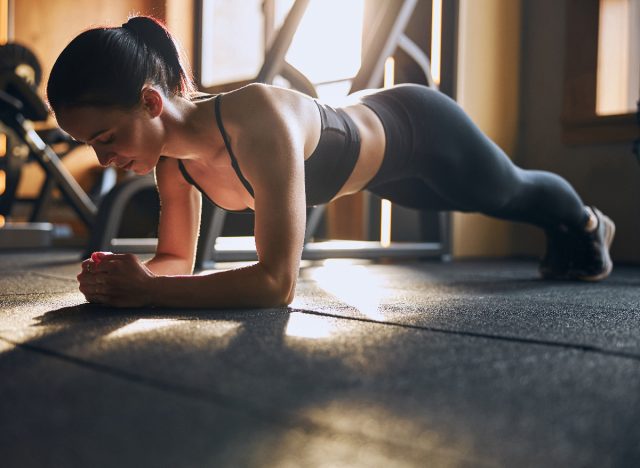
The plank trains your spine to resist movement, which is one of its primary functions. Your core doesn’t just create movement. It strengthens your core while your arms and legs do the work. When that stability improves, everything from lifting to walking becomes more successful.
Holding a plank builds muscle endurance by using isometric contractions. Your muscles remain under constant tension without changing length. That kind of strength helps your body maintain posture and control during long workouts. It also strengthens joint alignment, especially with your shoulders, spine, and hips.
You will see fatigue manifest in predictable ways. Your hips start to sag, your shoulders shift, or your lower back seizes up. Being able to hold a firm, straight plank position for a period of time shows that your spine can stay engaged and support your body without collapsing as fatigue builds.
How to Make a Solid, Clean Plank
Good lumber comes down to shape and durability. When you lock those in, the workout is more effective, and your time reflects your core strength.
How to do it:
- Place your arms on the floor with your elbows tucked under your shoulders.
- Extend your legs straight behind you with your feet hip-width apart.
- Brace your spine by tightening your midsection and pulling your ribs down.
- Squeeze your glutes to help keep your hips in line with your shoulders.
- Hold a straight line from your head through your hips to your heels.
- Maintain strong breathing while holding the position until your form breaks.
Best Variation: Top Plank, Side Plank, Plank Shoulder Taps, RKC Plank, Stability Ball Plank.
What Your Plank Time Says About Your Spine
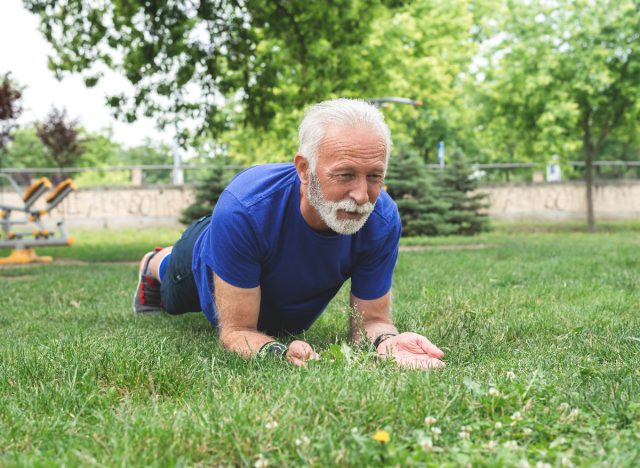
Your time gives you a clear picture of your core strength and endurance. The key is to maintain a clean environment at all times.
- In less than 30 seconds: A room to upgrade: Your spine may be struggling to maintain tension for long periods of time. This is a solid start.
- 30 to 60 seconds: Strong base: Build a basic level of strength that supports daily movement.
- 60 to 90 seconds: Strong Core: Your spine shows good endurance and control under fatigue.
- 90+ seconds: Top section: At this level, your core maintains alignment, tension, and stability as fatigue develops.
How to Build a Strong Spine Under Fatigue
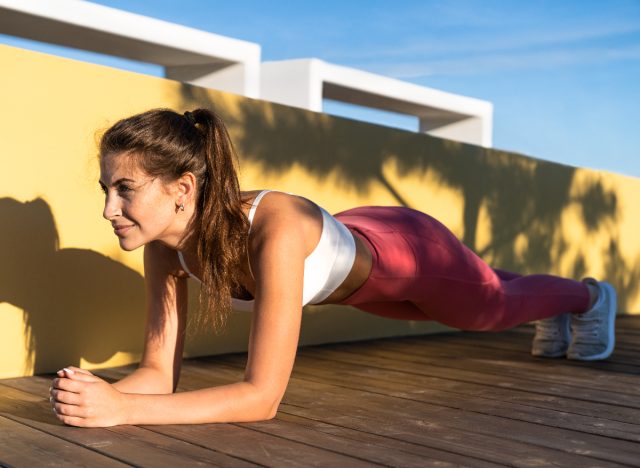
Improving your plank time comes from building strength that you can sustain, not just pushing without discomfort.
- Train your core regularly: Short sessions three to four times a week work well.
- Focus on stress, not just time: A solid plank with a full body hits for a long, sloppy grip.
- Add an anti-rotation function: Exercises such as Pallof presses and carries improve stability.
- Tighten your glutes and hips: A strong lower body supports better plank surfaces.
- Continue step by step: Add time in small increments to build endurance without losing form.
A strong core is reflected in the way you walk, not just the way you train. If you can hold a plank past that 90-second mark with solid form, you’ve built a strength level that sustains you beyond the gym.
References
- Zhong, Yuanji et al. “Effects of core training on balance performance in older adults: a systematic review and meta-analysis.” Frontiers in public health vol. 13 1661460. 9 October 2025, doi:10.3389/fpubh.2025.1661460
- Park, Sihwa et al. “Effects of plank exercise on respiratory capacity, physical fitness, and immunocytes in older adults.” Journal of physical rehabilitation vol. 19,6 332-338. 26 Dec. 2023, doi:10.12965/jer.2346536.268
Jarrod Nobbe, MA, CSCS
Jarrod Nobbe is a USAW National Coach, Sports Performance Coach, Personal Trainer, and author, and has been involved in health and fitness for the past 12 years. Read more about Jarrod


