A sports medicine doctor shares a wall sit benchmark that demonstrates elite leg strength
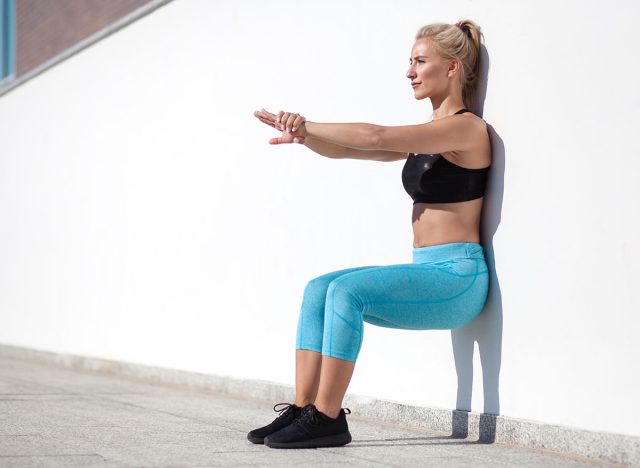
If you’ve never done a wall sit before, that’s probably what you’d think it was. This isometric exercise involves leaning against a wall with your knees bent at 90 degrees. It’s a great way to build strength, endurance, and stability in your glutes, hamstrings, and quadriceps. And not only that—it can improve your knee health, too.
Movement is a great way to test your leg strength. In fact, an expert tells us that, if you can hold a wall and sit for a long time after the age of 60, your leg strength is at its best.
What Is Considered Over-the-Wall Time For Those 60+?
In accordance with Ruben Chen, MDA Board Certified Sports Medicine Physician, Longevity Specialist, and Chief Medical Advisor at Sunrider International, the average wall sit times for those 60+ are usually between 40 to 65 seconds (or longer). That said, this benchmark is source and gender dependent.
“Most fitness benchmarks put the average performance at about 20 to 40 seconds,” Dr. Chen tells us. “For example, holding 40+ seconds is often considered ‘good’ or strong compared to peers, while times under 20 to 30 seconds are often below average. These figures come from coach’s guidelines and age-adjusted charts, as the official data set for this particular test in adults is limited, but they are consistent with showing a decline with age.”
What is called “Elite”
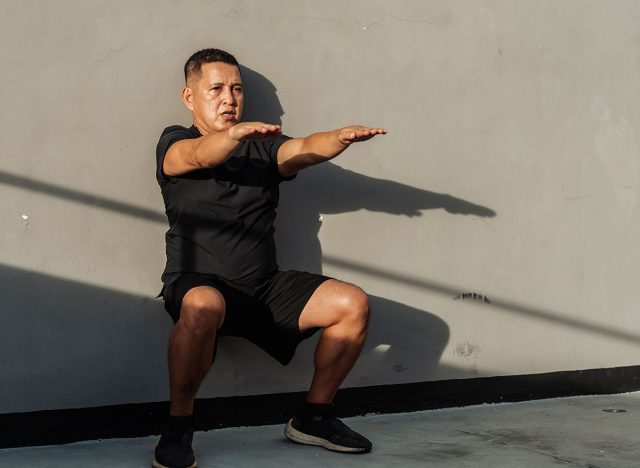
High-level performance for adults usually involves holding a wall position for 90 seconds or more while maintaining proper posture. This benchmark is often described as “elite,” “excellent,” or “top-tier” by many certified trainers and fitness experts, says Dr. Chen.
“Some sources extend this to 65+ seconds as ‘the best,’ or 2+ minutes as truly outstanding—putting a person above most peers in their age group. This level indicates strong muscular endurance and is often associated with better performance and independence,” he adds.
Core Muscles Engaged During Wall Sits
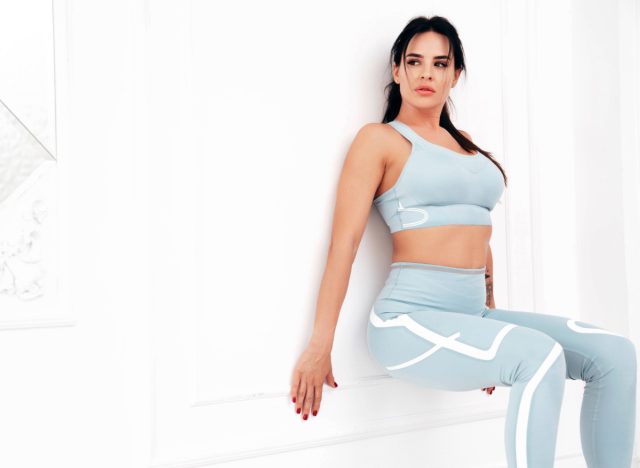
When you do wall sitting, your quads (front of the thighs), hamstrings, calves, glutes, and core stabilizers all get a strong workout. According to Dr. Chen, these muscles work isometrically to hold a sitting position against gravity.
“These muscles support daily activities such as standing from a chair, walking, climbing stairs, maintaining balance, and preventing falls by providing lower body strength, hip stability, and postural control,” Dr. Chen notes. “Strong quads and glutes in particular help maintain independence, reduce knee/hip strain, and improve overall mobility in older adults.”
How to Do Wall Sits
Here’s how to do a wall sit properly.
- Stand tall with your back pressed against the wall and arms stretched out in front of you.
- Slide down until your knees are bent at a 90-degree angle as if you were sitting in a chair.
- Hold the position for a fixed period of time.
Alexa Mellardo
Alexa is a freelance writer, editor, and content strategist based in Greenwich, CT. She has 11+ years of experience covering health, fitness, food, travel, lifestyle, and home. Learn more about Alexa


